Tigers Sign Joba Chamberlain

Summing up the proper reaction to today’s Joba Chamberlain signing is best done with body language – a shrug. Chamberlain is coming to Detroit on a one year, $2.5 million deal with some additional incentives built in. In baseball, $2.5 million is nothing, so it’s hard to get worked up about adding Chamberlain to the bullpen. It’s not a big contract and if it doesn’t work out, no harm done.
But that doesn’t mean you should expect much from Joba. You remember his name because he burst onto the scene as a dynamite reliever for the Yankees, but that was a long, long time ago. In 2007-2010, he bounced between the rotation and the pen. He did solid work out there, and was reasonably good in 2011 in limited innings. In 2012, he didn’t pitch much and was worse. In 2013, he pitched more, and was a lot worse.
| Year | G | GS | IP | |||||
|---|---|---|---|---|---|---|---|---|
| 2007 | 0.38 | 19 | 0 | 24.0 | 4.5 | 0.4 | 2.3 | 12.8 |
| 2008 | 2.60 | 42 | 12 | 100.1 | 7.8 | 0.4 | 3.5 | 10.6 |
| 2009 | 4.75 | 32 | 31 | 157.1 | 9.6 | 1.2 | 4.3 | 7.6 |
| 2010 | 4.40 | 73 | 0 | 71.2 | 8.9 | 0.8 | 2.8 | 9.7 |
| 2011 | 2.83 | 27 | 0 | 28.2 | 7.2 | 0.9 | 2.2 | 7.5 |
| 2012 | 4.35 | 22 | 0 | 20.2 | 11.3 | 1.3 | 2.6 | 9.6 |
| 2013 | 4.93 | 45 | 0 | 42.0 | 10.1 | 1.7 | 5.6 | 8.1 |
| 7 Yrs | 3.85 | 260 | 43 | 444.2 | 8.8 | 1.0 | 3.7 | 9.0 |
He has command issues and the strikeouts aren’t what they were way back in his heyday. He’s been more hittable and didn’t induce as many swings in 2013 as he had in the past. He has a nice fastball and slider, but he really struggles to command them. Maybe he can get it together, but you absolutely shouldn’t count on him being a key piece of the pen. This isn’t an elite setup arm – it’s a guy who might be able to fill that role, but is probably more of a middle reliever type. Definitely the third best righty, maybe the fourth best – and there are durability concerns.
For $2.5 million, that’s fine, but you’re running out of space to make a significant upgrade to your roster. Nathan replaces Benoit for an upgrade, but a more expensive one. Krol is a downgrade from Smyly. Rondon is Rondon. Coke and Crosby will look for the #2 lefty spot. Add in Joba and you’re at five relievers. Alburquerque, if healthy, makes six, and he was on the roster last year. If you carry a long man, you’ve filled the staff. Maybe you can find a better #2 lefty, but even that doesn’t give you much of a chance to make a difference. The Tigers bullpen will probably be about the same as last year in terms of quality – it just got more expensive in the process.
I was very pleased with the Fielder deal to free up money for other moves. Then they traded Fister to free up more money. With all that new cash, they signed a Nathan, Davis, and Joba. Those are all fine pieces, but the team is worse than they were in 2013. The short term cash went to waste. Maybe the offseason isn’t over, but the Tigers look to be retooling for the future while trying to tread water in the present. Signing an expensive closer while building for the future is perplexing, but that seems to be the plan. Maybe it isn’t and maybe there’s still another deal coming. But time is running out.
Getting To Know Robbie Ray, Trade Centerpiece
Last Monday, the Tigers traded one of the best fifteen or so pitchers in the league for three players from the Washington Nationals. Doug Fister was under contract for two more seasons at a reasonable affordable rate, something like 2 years and $18 million depending on exactly where they would have settled to avoid arbitration. For comparison, Scott Kazmir just got 2/$22M. Fister, on the market this year, would have gotten somewhere between $60 and $80 million. This is all by way of saying that Doug Fister was a valuable trade chip. Great pitchers who are cheap, not really freely available.
But many (all) of us were underwhelmed with the return. I found just a couple of people who thought the Tigers got a good value, but most of those people were just willing to trust Dave Dombrowski because he’s been good at making trades in the past and they figured he’d worked some magic. To be honest, it was pretty much just Lynn Henning and one person on Twitter.
One player they got back was Steve Lombardozzi, who is a tremendously well-liked utility player. I’ve heard splendid things about Lombardozzi as a dude, but Lombardozzi is a utility player. I love utility players, but you don’t trade star pitchers for Don Kelly when you already have a Don Kelly. (Although, the prospect of two Don Kellys…?)
Ian Krol is a solid lefty reliever who has a solid fastball and a nice hook. He’s capable of pitching in the middle innings and might succeed in a setup role. Nice player, nothing special. And remember, by trading Fister, the Tigers move Smyly into the rotation and lose a lefty reliever. Gain a lefty, lose a lefty.
So this trade comes down to Robbie Ray. Lombardozzi and Krol are fine players, but they’re nowhere close to Fister’s equal in terms of value. Ray is the centerpiece. He was on all the Nationals’ top prospect list, but no one seemed enthralled with him. He was a prospect, but not a PROSPECT.
But a funny thing has been happening over the last week or so. Pretty much all I’m hearing is how much Dombrowski loves Ray. I’m actually guessing he used that exact word, because everyone has been saying “love.” Dave loves Ray.
Which is interesting, because while Ray is a nice player, he’s doesn’t get rave reviews elsewhere. I’ll say upfront, I still don’t think the Tigers got good value in this deal. Ray might be a nice prospect, but the Tigers could have gotten more if they wanted to trade Fister according to multiple reports coming out of front offices. Additionally, why on Earth would you trade Fister to spend that money on Joe Nathan? It doesn’t add up. Unless Dombrowski loves Ray in a way that no one else can understand. He sees something. I’m not sure I agree, but I went looking for it.
THE NUMBERS
| Season | Team | G | GS | IP | K/9 | BB/9 | HR/9 | BABIP | ERA | FIP |
|---|---|---|---|---|---|---|---|---|---|---|
| 2010 | Nationals (A-) | 1 | 0 | 1 | 18.00 | 0.00 | 0.00 | 0.000 | 0.00 | -0.80 |
| 2011 | Nationals (A) | 20 | 20 | 89 | 9.61 | 3.84 | 0.30 | 0.300 | 3.13 | 3.19 |
| 2012 | Nationals (A+) | 22 | 21 | 105.2 | 7.32 | 4.17 | 1.19 | 0.332 | 6.56 | 5.00 |
| 2013 | Nationals (A+) | 16 | 16 | 84 | 10.71 | 4.39 | 0.96 | 0.273 | 3.11 | 3.82 |
| 2013 | Nationals (AA) | 11 | 11 | 58 | 9.31 | 3.26 | 0.62 | 0.317 | 3.72 | 3.42 |
Ray found his strikeout groove again in 2013 after backing off in 2012, but the walks have been high at every stop. The run prevention looks nice outside of 2012 and the FIP does as well. A perfectly fine stat line, but nothing spectacular. He’s listed at 6’2″, 170 and throws from the left side. 2014 will be his age 22 season. He’s moving nicely through the minors and will likely start the year in AAA.
The numbers make him look like a pitcher with some upside, who needs a lot of work. When you see big strikeout numbers like that, you dream, but the walks speak to a control problem. So let’s keep going.
THE SCOUTING REPORT
Scouts say Ray has live arm from the left side, but his secondary stuff lags behind his fastball. There is some reason to think his breaking ball will develop into a solid pitch, as it’s currently ahead of the changeup, but both offerings need work. His command looks like it will stay below average, but might be average or a touch above if everything goes perfectly. The motion has some effort, but doesn’t seem to be too worrisome. Certainly nothing like Chris Sale!
His callup window looks to be between late 2014 and mid 2015, but that will also now depend on the new organization. The Tigers tend to move pitchers quickly, but they also have less room on the big league staff than the Nats did. All in all, the impression is that Ray has a shot to be a solid #3 starter, but that a good #4 is a bit more realistic.
A nice player, but nothing remarkable. It’s easy to see how Dombrowski might like him – because Dombrowski loves pitchers who throw hard, but there’s some real doubt about his command and his breaking stuff, and even the people who are high on him don’t think he’s going to be a frontline arm.
The Tigers traded away Fister to get Ray, plus a couple of pieces. Given that we know other executives wanted to get in on the Fister trade and were told no, there’s a clear signal that Dombrowski wanted Robbie Ray badly. He had a specific target and went out and got him. The die has already been cast, so at this point, it’s all about waiting to see if he was right.
I have my doubts given that Fister was already better than anyone thinks Ray will be, but maybe the Tigers have a way to fix Ray’s command and secondary stuff that no one else has. Maybe they think they can make him into a star. Maybe. Maybe. Maybe.
H/T to Nathaniel Stoltz for gathering comments from scouts.
Tigers Sign Rajai Davis
News broke late Monday that the Tigers and Rajai Davis were close to a deal and the news was confirmed Tuesday morning on what appears to be a 2 year, $10 million pact. Davis is very good player to have on your roster at that price. At $5 million per season, you’re asking for, at most, a win above replacement per year and Davis can offer that if utilized correctly.
Davis’ big carrying tool is his speed. He’s one of the best baserunners in the league:
| Season | G | PA | SB | BsR |
| 2006 | 20 | 17 | 1 | -1.3 |
| 2007 | 75 | 219 | 22 | 1.9 |
| 2008 | 113 | 226 | 29 | 4.5 |
| 2009 | 125 | 432 | 41 | 8.2 |
| 2010 | 143 | 561 | 50 | 6.6 |
| 2011 | 95 | 338 | 34 | 4.6 |
| 2012 | 142 | 487 | 46 | 6.9 |
| 2013 | 108 | 360 | 45 | 10.2 |
You can see that in only limited playing time over his career he’s routinely stealing more than 30 a season and is adding between 0.5 and 1.0 wins with his overall baserunning game. He’s a career 87 wRC+ hitter, but he gets on base enough for his speed to play. There is very little power, but value is value. The Tigers could use some element of speed on their roster.
Davis hits lefties well and can’t touch righties, so a platoon with Dirks seems likely. Davis should be able to handle himself against left-handers this year and should add plenty of value on the bases in order to earn his $5 million salary. In that sense, this is a good move. Davis is a useful player on a good deal.
But the issue is the opportunity cost of signing Davis. At this point, the Tigers have essentially filled all 13 of their position player slots, all five of their starting rotation slots, and have just a couple of bullpen spots left up in the air. That isn’t a bad thing in itself, but the Tigers are wrapping up the offseason with a downgraded roster. Davis isn’t a bad addition, but adding Davis prevents them from adding someone like Choo who would make them better. It seemingly decreases the odds of a trade as well.
The Tigers downgraded their rotation from Fister to Smyly, and we should also expect a little regression from Sanchez and Scherzer. They swapped Infante to Kinsler (pretty even), Peralta for Iglesias (slight downgrade), and Fielder for Castellanos (downgrade). In the bullpen, they’ve traded Smyly and Benoit for Nathan and Krol (downgrade). The other spots are up in the air, but even if you think I’m being harsh, the team certainly didn’t get better. It’s fine to rework the roster, but now they’re out of places to upgrade. And Dirks hardly needs a platoon partner, either (99 wRC+ vs LHP, 104 wRC+ vs RHP career).
In a vacuum, this move is a good one. Davis is a nice player who will bring you $5 million or better in value, but putting him on the roster blocks a move down the road that could bring more value to the team. The Tigers are at a place in which paying $20 million for 3 wins is probably a better baseball move than paying $5 million for one win. It’s not the value play, but if the Tigers are going to push their chips in and go for it, you need to be in with everything.
People keep waiting for the big move on the horizon in which the Tigers add a star outfielder. I don’t think that move is coming. Dave Dombrowski will leave Orlando with Rajai Davis and a little work to do in the bullpen – and that’s probably going to be it. The Tigers offseason plan has been a strange mix of smart and foolish. Somehow, signing Davis is both.
Casey Crosby Is Moving To The Bullpen
In a move that was a long time coming, news broke Monday that Tigers LHP Casey Crosby will be given a chance to compete for a bullpen spot in 2014. Crosby will work to be one of the Tigers two lefties with Phil Coke and Ian Krol, and will hopefully try to approximate the excellent production offered by Drew Smyly in 2013.
It isn’t fair to put those expectations on Crosby, but he’s a hard throwing lefty who struggles with command. That screams bullpen arm. I’ve been looking for it for a while, and the time has finally come. He brings a fastball that touches 94-95, but sits a little lower. That said, it’ll play up in the bullpen. His breaking ball isn’t bad but the absence of a third pitch and command issues have prevented him from sticking.
High strikeouts, but high walks. Durability issues. That’s Crosby. There isn’t really a lot else to say, other than that Crosby was a top prospect because of his potential, but that potential wasn’t realized. You know, there’s no such thing as a pitching prospect.
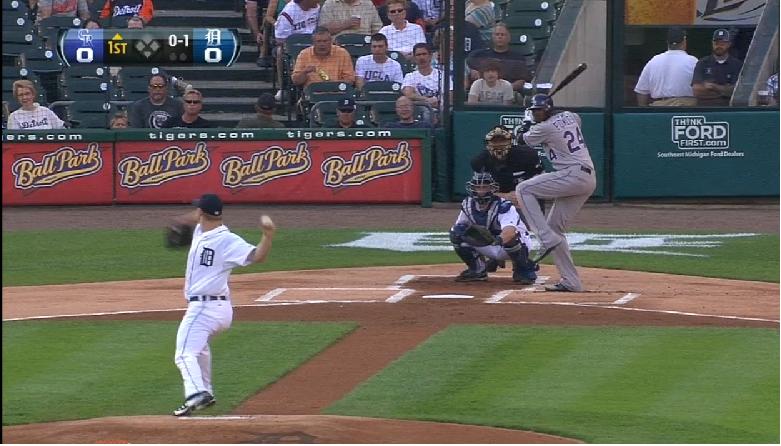
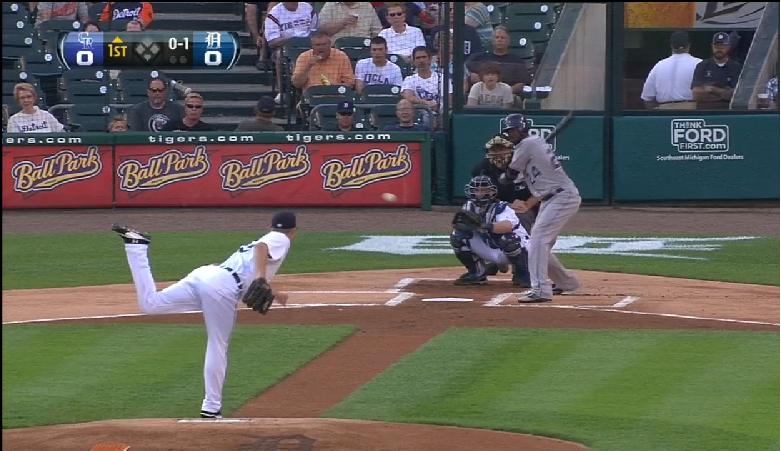
He’s entering his age 25 season and has just 12.1 MLB innings. A move to the bullpen should help. Here’s his delivery at a few key points. Screams reliever to me.


Tigers Sign Joe Nathan to Bolster the Pen
A day after the biggest mistake of his Tigers tenure, Dave Dombrowski went out and signed that “proven closer” he’s been looking for since the dawn of time. Joe Nathan will join the Tigers for 2 years and (about) $20 million.
While the notion of a “proven closer” is nonsense and the use of a save-situation only relief ace is silly, Joe Nathan is a good reliever and having good relievers on your team is important. And aside from missing all of 2010 and some of 2011, Nathan has been an extremely durable relief pitcher for many years. Nathan is 39, but has been an excellent reliever in every season since 2003 except for the two injury affected ones mentioned above.
He threw more than 60 innings per season from ’03-’09 and ’12-’13 and was below 2.0 fWAR in only two of those nine seasons. Nathan is a great reliever across the board and looks healthy enough to continue for another year or two. Relievers are fragile, but the risk right now is based on health rather than forgetting how to get batters out.
Nathan will settle the angst many feel about the 9th inning, even if that angst is silly. You don’t need closer experience to succeed in the 9th inning and the entire idea of a 9th inning specialist is wrongheaded, but having Nathan on the team makes the Tigers better. If Ausmus came out today and told us he was going to use Nathan as a relief ace in high leverage situations, this would be a great deal. In the absence of this, it’s a good one.
You’re probably paying Nathan a little more that he’s worth, but the market for free agent relievers is crazy and paying a little extra for the best free agent at the position is fine if you’re the Tigers. The Tigers need to upgrade their bullpen and Nathan is simply a slightly better version of Benoit for a slightly higher price tag. It’s a step up, but there’s more work left to be done, especially now that Smyly will be in the rotation for good. This doesn’t solve any problems from 2013, it just keeps them from getting worse.
The offseason picture for the Tigers is confusing, but this deal was easy to see coming. The Tigers have wanted a closer for a long time, and they finally found one on the market. It’s unclear how much of this move was predicated on the Fielder and Fister trades or if it would have happened anyway. Dombrowski got high marks for the Fielder deal and terrible marks for the Fister swap. The Nathan deal works, but it doesn’t really tell us much about the overall strategy. If the Tigers are planning to go all in for 2014, the Fister trade makes no sense. If they’re reloading for the future, the Nathan trade makes no sense. Time will tell, but for now, the goals and motivations are unclear. The Tigers are paying Joe Nathan more money than they would have paid Doug Fister in 2014 and probably about what they would have paid him in 2015. There really isn’t a way to make sense of that no matter how hard you try.
Tigers Trade Fister, Make Big Mistake
While we all love that a high school student, Chris Cotillo, has beaten Heyman and Rosenthal to most of the big news this winter, he didn’t bring us good news on this night. Cotillo reported Monday evening that the Tigers traded Doug Fister to the Nationals in exchange for UTIL Steve Lombardozzi, LHP Ian Krol, and LHP Robbie Ray.
There was a good chance we’d see a Tigers starter get traded this offseason due to Dombrowski’s desire to get Smyly into the rotation and Scherzer, Porcello, and Fister were all rumored to be candidates to head elsewhere. Fister seemed the least likely to move because he is cheaper and under control for longer than Scherzer while being better than Porcello (despite being older). It isn’t crazy to move at starter when you have six good ones, but trading a 4 win pitcher in his prime to the Nationals for a package that doesn’t do much for the 2014 Tigers seems pretty strange.
Fister has been the 9th best pitcher in the league since 2011 and figures to remain more valuable than his salary for the next two seasons. He has tremendous command and an excellent ground ball rate to go along with his improving strikeout rate entering his age 30 season and Nats fans are going to love watching him work. Fister might not be an “ace,” but he’s just outside that group of pitchers. He’s an absolute star.
The package the Tigers got back is the kind of package you get back in a salary dump. Lombardozzi is useful bench player, Krol is bullpen lefty, and Ray has a good fastball but needs a lot of work on his secondary stuff. Combined, there is simply no way they’re equal to Fister in 2014 without a serious injury. This unquestionably makes the 2014 Tigers worse.
In looking at this deal in conjunction with the Fielder move, it’s starting to look like the Tigers are thinking about reloading for the future. Which is pretty strange given how close they’ve come during each of the last three seasons. The Fielder deal worked in order to clear money to make other moves, but this deal is a salary dump that might pay off in three years. Maybe. And the worst part about it is that someone would have paid way more for Fister. Fister is great. Fister is almost an ace with two years left. He’s practically David Price for less money. The Tigers got a better Don Kelly and some bullpen depth so that they could save something like $6 million.
This isn’t a good deal unless Ray turns into a star, and even if he does that isn’t going to be while Verlander, Scherzer, and Cabrera are at their peaks. It’s possible this is some weird prelude to signing Robinson Cano, but other than that this looks absolutely terrible. The Tigers picked up very little for a star player on an affordable deal. And they could have gotten more.
You won’t often hear this, but Dave Dombrowski just got hosed in a trade. The 2014 World Series is looking a little bit farther away tonight. Worst of all, Doug Fister is moving to Washington, which means I won’t be able to watch a single one of his starts due to MLB’s Blackout Policy.
Tigers Re-Sign Don Kelly
Anytime you can sign the best player on the planet to a 1 year, $1 million deal, you have to do it. And while some argue that Trout is a superior player, Don Kelly is right there with him. Certainly, by this point you recognize that the preceding sentence was written tongue-in-cheek, but my feelings remain the same. Don Kelly is awesome.
The Tigers re-upped with Kelly for another year at $1 million, which is about $500,000 above the league minimum, or essentially nothing. The Tigers signed Kelly to the opportunity cost of a roster spot. He’s going to be the 25th man on the roster for the 5th straight season.
This is a smart baseball deal because Kelly serves a very useful purpose. Generally, speaking he’s a replacement level player, but he’s a replacement level player at five positions. Kelly can play all four corners well and centerfield sufficiently enough to allow the rest of the Tigers roster to come together less rigidly. He’s not someone you want to offer 500 PA, but he’s the perfect bridge player. If a player is hurt for a day or two, Kelly is the perfect substitute. He’s also being paid like a replacement player, so it’s not like the Tigers are paying a premium for this kind of available skill. Kelly is a good defender who can take a walk and brings a lot of versatility to the club.
And beyond that, he’s a super nice dude and it’s satisfying to root for someone like that. Kelly enjoys the game and knows his place in it. Regular readers know I have an affinity for utility players and champion them at every turn. After a strong first half (110 wRC+) last year, I jumped at the chance to tell everyone how great Kelly was. It’s cool when Miguel Cabrera succeeds, but in my opinion, it’s much, much, much more fun when Don Kelly succeeds.
Talent and performance are most important with respect to winning, but in terms of fan enjoyment, every team needs a Don Kelly or two. Good guys with good attitude are good for moral. There isn’t a whole lot to analyze about this deal other than to say it’s a cheap way to fill a useful position and it comes with the added benefit of involving and athlete you can feel good about and having him around doesn’t stop the Tigers from making other upgrades. Don Kelly isn’t a great major league player, but Don Kelly is a player I enjoy having on the team.
Austin Jackson’s Future
Austin Jackson turns 27 about two weeks before Spring Training begins in February and that’s significant because more players have their best season at 27 than at any other age. Austin Jackson has already turned in four solid to great big league seasons and macro level aging curves tell us that Jackson should be heading into his peak year. We might not see the best Jackson has to offer in 2014, but it’s worth considering exactly what kind of player he is two years ahead of free agency.
| Year | G | PA | R | HR | SB | CS | |||||
|---|---|---|---|---|---|---|---|---|---|---|---|
| 2010 | 151 | 675 | 103 | 4 | 27 | 6 | .293 | .345 | .400 | .745 | 102 |
| 2011 | 153 | 668 | 90 | 10 | 22 | 5 | .249 | .317 | .374 | .690 | 88 |
| 2012 | 137 | 617 | 103 | 16 | 12 | 9 | .300 | .377 | .479 | .856 | 129 |
| 2013 | 129 | 614 | 99 | 12 | 8 | 4 | .272 | .337 | .417 | .754 | 103 |
| 4 Yrs | 570 | 2574 | 395 | 42 | 69 | 24 | .278 | .344 | .416 | .759 | 105 |
| 162 Game Avg. | 162 | 732 | 112 | 12 | 20 | 7 | .278 | .344 | .416 | .759 | 105 |
Jackson had a strong rookie campaign before crashing back to Earth in 2011, but bounced back extremely well in 2012 as he was one of the top centerfielders in baseball. 2013 was a solid year, even if it did look disappointing next to the season that came before. Let’s go beyond the basic numbers.
| Season | PA | BABIP | wOBA | wRC+ |
| 2010 | 675 | 0.396 | 0.329 | 101 |
| 2011 | 668 | 0.340 | 0.305 | 87 |
| 2012 | 617 | 0.371 | 0.371 | 134 |
| 2013 | 614 | 0.333 | 0.332 | 107 |
| Season | PA | BsR | UZR | DRS | WAR |
| 2010 | 675 | 6.0 | 5.3 | 13 | 3.9 |
| 2011 | 668 | 1.2 | 7.8 | 29 | 2.4 |
| 2012 | 617 | -0.8 | 3.5 | 5 | 5.2 |
| 2013 | 614 | 5.6 | -3.8 | 3 | 3.1 |
Jackson was always criticized as a guy who had a high BABIP that couldn’t be sustained, but we’ve seen enough to know that he’s always going to be a high BABIP guy. You won’t see .390 on any sort of consistent basis, but .330-.350 seems entirely reasonable going forward based on his batted ball profile. He’s a terrific baserunner even if he didn’t steal a ton of bases in 2013 and he’s somewhere just better than average in centerfield defensively overall. All told, he’s contributed 14.6 WAR in four big league seasons.
Jackson is, at worst, a solid MLB regular or, at best, a potential superstar. You’re happy with either of those outcomes, but which do we think is more likely? Let’s consider his game in three dimensions.
BATTING
The league average centerfielder hit .253/.324/.395 in 2013 with a 99 wRC+. Jackson hit .272/.337/.417 with a 107 wRC+. In his worst season, he hit 13% worse than league average and has been as good or better than league average in each of his other three seasons. Jackson probably isn’t the hitter he was in 2012, but even if we pull him toward his career averages, he grades out better than the average centerfielder at the plate.
Jackson has cut down on his strikeouts since his first two seasons and the power has picked up over the last two seasons as well. At his best, Jackson can be a dynamic force in the lineup, but also has a tendency to go through funks when his timing starts to drift at the plate. When he keeps his swing short, you start to dream about All-Star Games, when he doesn’t, you think he might need to head to the bottom third of the order.
Jackson clearly has the physical tools to succeed at the plate, but the key for him is to fine tune his approach and maintain consistent swing mechanics, which are two skills that shouldn’t decline as he ages. That means he should get better at the plate over the next couple of seasons, or at least not get worse too quickly.
Jackson probably figures as a player who will hit 10-15% better than league average in 2014, which makes him a valuable bat in center.
BASERUNNING
Jackson grades out as a tremendous baserunner. In two of his four big league seasons he’s been worth more than five runs on the bases with the other two seasons being close to average. He’s stolen fewer bases every year of his career, but even with only 8 steals in 2013 he added 5.8 runs with his legs.
He takes the extra base at an above average rate and seems to pick up steam as he rounds second on singles and doubles hit by his teammates. He doesn’t have the best basestealing instincts, but it’s also hard to judge simply because the Tigers have limited incentives to send runners given their impressive offense. Baserunning value peaks early, so we shouldn’t expect Jackson to get dramatically better, but it’s entirely reasonable to assume he’ll be worth 3-5 runs on the bases in 2014.
DEFENSE
You got a chance to see Jackson’s DRS and UZR in the table above, but I also like to look at RZR, which simply measures the percentage of balls in his zone he turns into outs. Jackson’s career mark in CF is .939 which is solidly above average for that position.
People rave about Jackson in center, but his skills are somewhat divergent. His range is excellent and he’s a pretty good route runner, but his arm is definitely below average. Additionally, Jackson never dives and occasionally gets caught in between as a result and turns easy outs into hits. That is both frustrating and promising. If you can get Jackson to learn to dive or at least make better late route decisions, you might be able to improve his already stellar range.
It’s probably safe to count on Jackson for 5 runs above average in centerfield over each of the next two years..
OVERALL
Back of the envelope calculations put a player like we’ve just described somewhere in the 3-4 WAR range depending on how much he stays on the field. I think 600 PA is safe even if you expect him to miss two to four weeks with an injury and he’s likely to bring in something like five runs above average in each of the three dimensions of the game. Factor in position and replacement level and you’re looking at a 3-4 win player.
Jackson has shown the ability to play better in each of those dimensions, but if we’re being conservative, he’s probably more like an above average player than a great player. If you filter centerfielders by ages 23-26, Jackson ranks 51st all time in WAR, two wins behind Matt Kemp and 3.4 wins behind Carlos Beltran. I wouldn’t compare Jackson to those players for several reasons, but I don’t think it’s out of the question to suggest Jackson’s going to pick up $15 million per season in free agency if he keeps his performance on par with his career averages.
I suggested the Tigers could probably pick up five years of Jackson for $55 million last offseason and that number has likely stayed reasonably consistent because he’s added another year of service but also come down from his 2012 peak. The Tigers have more pressing contract needs, but now would be a good time to lock up their centerfield.
Jackson looks like he has a few more 3+ WAR seasons in him and a five year deal right now would buy out two arbitration years and three on the free agent market. Something like 5/$60M would be a good place to start before he has a chance to have another great year or salaries start to inflate.
In general, we’ve seen enough of Jackson to recognize that he’s one of those players who is above average everywhere and probably not a superstar anywhere. Those are vital pieces of a championship core and if fans have the right expectations, he’s should be a joy to watch roam center.
How Much Will The Tigers Infield Defense Improve?
One of the knocks on the recent versions of the Tigers was that they were terrible at infield defense. It’s hard to argue with that very stringently. Cabrera was bad. Fielder was bad. Peralta and Infante were somewhere around average for their position. Together, that isn’t a great group and the estimated cost of that group compared to a perfectly average bunch is in the neighborhood of 30 runs or three wins per season. Those estimates aren’t perfect, but they are a reasonable starting point.
This is an exercise, not anything definitive, so take the precision with a grain of salt. In 2013, Cabrera was about 17 runs worse than average at third, Fielder was something like 5-10 runs below average, and Infante and Peralta were both within four or five runs of average depending on the stat you prefer. The defensive metrics I’m referencing are Defensive Runs Saved or Ultimate Zone Rating, which each assign run values to defensive plays relative to the performance of a league average player at that position. Zero is average for the position and every ten runs above or below average is roughly equal to a win.
What we’re after here is how the Tigers defense will look in 2014 with a new player at every position. Cabrera will be back at first, Kinsler will play second, Iglesias at short, and someone at third – potentially Castellanos and potentially Mr. Outside Hire. Let’s develop a range of estimates for each player and then combine them to get a sense of what we might be dealing with. These ranges are my estimates based on UZR/DRS data from the last three years and additional information gathered using defensive efficiency numbers and visual scouting.
Miguel Cabrera – First Base
Cabrera is an interesting case because of the injury, but I’ll assume that he’ll be healthy by the time the season starts. During his career at first base, Cabrera rated out as a slightly below average fielder with fluctuations on both sides of zero. His ability to turn batted balls into outs was below average, but he became reasonably good at turning double plays from the position and brings a pretty good set of hands to the position. We have to factor in that he’s two years older, but also that he has been working to get better at a tougher position.
Run Estimate: -8 to +5
Ian Kinsler – Second Base
Kinsler’s story is interesting because UZR and DRS can’t seem to agree if he’s an average defender or a pretty good one. Kinsler has solid range but probably misplays balls a little bit too often. Thirty is in his rear view mirror, but he remains a solid athlete who shouldn’t be in for a rapid decline.
Run Estimate: -2 to +8
Jose Iglesias – Shortstop
Iglesias is a wizard with the glove, but we have very little major league data with which to judge him. UZR loves him at short with DRS thinking he’s around average. Neither loved him at third, but again, we’re dealing with 1,000 sporadic innings at multiple positions. The scouting reports on Iglesias are sparkling giving him plus marks for range and elite grades on his arm and hands. I’ve heard plenty give him 80 grades (the highest possible) for his defense and my personal observations concur. He’s one of the best in the game right now. I asked Mark Anderson of BP and TigsTown if he thought he was better than Andrelton Simmons, and his answer was an emphatic, “Absolutely.”
Run Estimate: +5 to +15
Nick Castellanos/Someone Else – Third Base
We don’t really know who will man third base, but the leader right now is Castellanos. The most recent evaluations of his defense at the corner weren’t great, but enough people said they thought he could stay there that I’m not going to estimate a crazy, disaster number. He has some raw skills, but his footwork needs improvement and he hasn’t played there in over a year. With some effort, I can easily see him getting himself to Cabrera or better levels in 2013. It’s hard to judge an unknown, so I’ll simply tack on a few positive runs to account for the possibility they sign a good defender at the position.
Run Estimate: -15 to +3
Results
Totaling those estimates up, we find a range of -20 to +31 runs. That’s a wide range, but these are the outer bounds of the estimates. The Tigers infield was something close to -30 last season (-20 if we’re being generous), so this looks to be a ten run upgrade even if things don’t go terribly well. At the outside, it could be a sixty run improvement, which is about six wins in the standings, but even at the lowest estimate, they’re most likely getting better.
Granted, we’re dealing with estimates based on imperfect measures, so you have to look at this skeptically. It’s possible that the Tigers have added somewhere between one and six wins of value by improving their defense. They will certainly be giving some of that away on the offensive side as they drop from Peralta to Iglesias and Fielder to Castellanos, but it’s hard to imagine a world in which the defense doesn’t get better.
The Tigers starters are strikeout pitchers so infield defense isn’t as valuable to them as it is to others, but Fister and Porcello put the ball on the ground a lot, which means better defense should bring their RA9 or ERA numbers closer to their true talent FIP numbers in 2014.
League average BABIP on ground balls in 2013 was .241. For the Tigers it was .266. For Fister it was .295. For Scherzer it was .280. Defense isn’t something we can break down into tiny samples with great success, but the Tigers allowed way more hits on ground balls than average last year and that number is probably going to go down in 2014. There are a lot of moving parts, but the Tigers defense should be better off having made the big trade.
Getting To Know Ian Kinsler, Detroit Tiger
Over the last few days we’ve had many discussions about the merits of the big trade, and the view from the first inning is that the Tigers made a good move for the long run with the short run value left a bit up in the air based on how they spend their financial savings. We think Prince is likely to bounce back a little bit and Kinsler will continue on his current path which places him somewhere around 3 wins if he plays most of the 2014 season. It’s kind of hard to say anymore about the deal as a whole without knowing what Dombrowski is up to next, but we can start to think about Ian Kinsler in a Tigers uniform because there’s a pretty high probability that’s actually going to happen. I mean, unless those Robinson Cano private jet to Willow Run rumors are true…
Kinsler is entering his age 32 season and has eight years of big league experience almost exclusively at second base for the Texas Rangers.
| Year | G | PA | R | H | 2B | 3B | HR | SB | CS | |||||
|---|---|---|---|---|---|---|---|---|---|---|---|---|---|---|
| 2006 | 120 | 474 | 65 | 121 | 27 | 1 | 14 | 11 | 4 | .286 | .347 | .454 | .801 | 105 |
| 2007 | 130 | 566 | 96 | 127 | 22 | 2 | 20 | 23 | 2 | .263 | .355 | .441 | .796 | 108 |
| 2008 | 121 | 583 | 102 | 165 | 41 | 4 | 18 | 26 | 2 | .319 | .375 | .517 | .892 | 134 |
| 2009 | 144 | 640 | 101 | 143 | 32 | 4 | 31 | 31 | 5 | .253 | .327 | .488 | .814 | 107 |
| 2010 | 103 | 460 | 73 | 112 | 20 | 1 | 9 | 15 | 5 | .286 | .382 | .412 | .794 | 110 |
| 2011 | 155 | 723 | 121 | 158 | 34 | 4 | 32 | 30 | 4 | .255 | .355 | .477 | .832 | 118 |
| 2012 | 157 | 731 | 105 | 168 | 42 | 5 | 19 | 21 | 9 | .256 | .326 | .423 | .749 | 97 |
| 2013 | 136 | 614 | 85 | 151 | 31 | 2 | 13 | 15 | 11 | .277 | .344 | .413 | .757 | 105 |
| 8 Yrs | 1066 | 4791 | 748 | 1145 | 249 | 23 | 156 | 172 | 42 | .273 | .349 | .454 | .804 | 110 |
| 162 Game Avg. | 162 | 728 | 114 | 174 | 38 | 3 | 24 | 26 | 6 | .273 | .349 | .454 | .804 | 110 |
Those numbers can give you a basic sense of his career path, but we’re obviously going to dig a little deeper to understand the type of player he is.
AT THE PLATE
| Year | PA | BB% | K% | ISO | BABIP | wOBA | wRC+ |
| 2006 | 474 | 8.40% | 13.50% | 0.168 | 0.304 | 0.345 | 102 |
| 2007 | 566 | 11.00% | 14.70% | 0.178 | 0.279 | 0.35 | 108 |
| 2008 | 583 | 7.70% | 11.50% | 0.199 | 0.334 | 0.385 | 133 |
| 2009 | 640 | 9.20% | 12.00% | 0.235 | 0.241 | 0.351 | 105 |
| 2010 | 460 | 12.20% | 12.40% | 0.125 | 0.313 | 0.355 | 114 |
| 2011 | 723 | 12.30% | 9.80% | 0.223 | 0.243 | 0.364 | 123 |
| 2012 | 731 | 8.20% | 12.30% | 0.166 | 0.270 | 0.327 | 100 |
| 2013 | 614 | 8.30% | 9.60% | 0.136 | 0.288 | 0.334 | 105 |
Kinsler’s declining walk rate is a concern, but he also doesn’t strike out very often. His power has really been up and down throughout his career as has his BABIP. You’ll notice with a more complete number like wRC+, he’s been a league average hitter or better in every season of his career with a couple of big years in which he hit for more power. If we’re thinking about Kinsler heading into his Tigers years, there is really no way we can expect that pop to return. Looking at an average to slightly above average bat with a wRC+ somewhere between 100-110 probably makes sense heading into 2014.
Kinsler has always been known for his home/road split. Texas is one of the best parks in which to hit, but it’s important to note that Comerica Park is becoming for hitter friendly over time.
| Split | G | PA | HR | tOPS+ | |||||
|---|---|---|---|---|---|---|---|---|---|
| Home | 538 | 2399 | 85 | .304 | .387 | .511 | .898 | .311 | 123 |
| Away | 528 | 2392 | 71 | .242 | .312 | .399 | .710 | .252 | 77 |
For his career, the split is pretty significant and in 2013 there’s still plenty about which to be worried.
| Split | G | PA | HR | tOPS+ | |||||
|---|---|---|---|---|---|---|---|---|---|
| Home | 68 | 301 | 5 | .292 | .371 | .408 | .779 | .302 | 107 |
| Away | 68 | 313 | 8 | .263 | .317 | .418 | .735 | .273 | 93 |
You’ll notice Kinsler slugged better on the road in 2013 despite getting on base much less frequently. Generally speaking, we should expect Kinsler to hit worse at Comerica than he did in Arlington, but everyone hits worse in Comerica than they do in Arlington. The adjustments he makes will be important.
There’s also some concern that he doesn’t use the right side of the field very effectively, but that’s always been part of his game so it’s not like our view of him going forward should change very dramatically. He has three career homeruns to the right-side of second base, though, which is crazy.
All in all, Kinsler is a solid major league hitter. In 2013, the average second baseman hit 9% worse than league average. Kinsler hit 5% better. For reference, Infante was 17% better but that was also Infante’s best season ever.
BASERUNNING
Kinsler has been a very strong baserunner in his career both with respect to taking extra bases and stealing bases efficiently. Here are his overall baserunning runs above average:
| Year | PA | BsR |
| 2006 | 474 | 0.7 |
| 2007 | 566 | 7.2 |
| 2008 | 583 | 8.9 |
| 2009 | 640 | 6.1 |
| 2010 | 460 | 3.4 |
| 2011 | 723 | 9.5 |
| 2012 | 731 | 4.6 |
| 2013 | 614 | -0.5 |
His 2013 didn’t look great and that was mostly a function of getting caught stealing much more than normal.
| Year | SB | CS | OOB | XBT% | |
|---|---|---|---|---|---|
| 2006 | 11 | 4 | 73% | 6 | 45% |
| 2007 | 23 | 2 | 92% | 2 | 52% |
| 2008 | 26 | 2 | 93% | 7 | 59% |
| 2009 | 31 | 5 | 86% | 3 | 42% |
| 2010 | 15 | 5 | 75% | 8 | 55% |
| 2011 | 30 | 4 | 88% | 4 | 66% |
| 2012 | 21 | 9 | 70% | 4 | 53% |
| 2013 | 15 | 11 | 58% | 7 | 61% |
| 8 Yrs | 172 | 42 | 80% | 41 | 55% |
Until last year, Kinsler was one of the most successful basestealers in the game. The rule of thumb is that you need to have a success rate of 70% or better for it to be worth it and Kinsler had some seasons in the high 80s and 90s. It’s unclear if 2013 is a blip or a trend, but given how rough the Tigers are on the bases, he can only be an upgrade. That is especially true when it comes to his extra bases taken percentages as league average is 39% and he has been above 50% in each of his last four seasons.
It’s important to realize that Kinsler is only going to get worse on the bases as he ages, but he’s coming down from a very high peak. There’s no question he makes the Tigers a better baserunning team and should be able to provide at least a couple of runs above average in that department in 2014.
FIELDING
| Season | Inn | DRS | RZR | OOZ | UZR | UZR/150 |
| 2006 | 1032 | -3 | 0.827 | 20 | -8.1 | -8.5 |
| 2007 | 1136.2 | 4 | 0.845 | 53 | -8.7 | -9 |
| 2008 | 1064 | -9 | 0.801 | 20 | -4.8 | -5.8 |
| 2009 | 1258 | 22 | 0.835 | 47 | 10.1 | 10.1 |
| 2010 | 905.1 | 7 | 0.854 | 23 | 3.3 | 6 |
| 2011 | 1269 | 18 | 0.872 | 38 | 16 | 17.3 |
| 2012 | 1265 | 1 | 0.770 | 66 | -0.3 | -0.1 |
| 2013 | 1095.1 | 11 | 0.836 | 34 | -1 | -1.2 |
The report on Kinsler’s defense is a little bit mixed, but it tells a pretty clear story if you know what to look for. DRS likes Kinsler more than UZR over the course of his career, but both have him as something better than average. The question isn’t if Kinsler is good, it’s if he’s a little better than par for the course or if he’s great. RZR tells you the percentage of balls in his zone he’s turned into outs and his career mark of 82.9% puts him solidly above average at second base. Kinsler has great range, but occasionally boots a few to many balls. That’s nice to see in the data, because that’s exactly what I thought about him based on my own observation.
Kinsler isn’t going to be another Iglesias, but he’s going to be a solid defensive player who can stay at second base at least for a couple more seasons.
THE ENTIRE GAME
So Kinsler has an above average bat for the position and adds positive value on the bases and in the field. He’s a little bit injury prone, but he’s been a solid major league regular or better in every year of his career regardless:
| Year | PA | WAR |
| 2006 | 474 | 1.1 |
| 2007 | 566 | 2.5 |
| 2008 | 583 | 4.9 |
| 2009 | 640 | 4.5 |
| 2010 | 460 | 3.2 |
| 2011 | 723 | 7.3 |
| 2012 | 731 | 3.0 |
| 2013 | 614 | 2.5 |
Kinsler is leaving his prime years, but there’s no reason he can’t produce a could more 2-3.5 win seasons if he stays reasonably healthy. Kinsler is one of those players who is above average everywhere but great nowhere. Those are very useful players, especially when the Tigers already have plenty of players who are really good at certain things and not so good at others. Kinsler adds nice balance to the team and should earn a good portion of the salary he has coming his way.
The Tigers likely aren’t doing wheeling and dealing this offseason, but the first big move netted them some financial savings and pretty nice player to boot.
 New English D