The Nine Best National League Starting Pitchers for 2013

Over the last nine weeks, we’ve chronicled the best players at each field position and the best starters the AL has to offer. Here, we’ll wrap up this particular run with the National League’s best starters.
I’ve often commented on the level of difficulty each list gave me during its construction, and this one, like the AL list, gave me trouble because there were a good number of candidates for the back half of the list. I feel strongly about the top five, but I think 6-15 could go in a lot of directions.
I hope you’ve enjoyed these rankings as a topic of debate and a way to preview the 2013 season. We’ll pick up next Saturday with other types The Nine lists, but we’ll revisit these lists throughout the season to see how well they prepared us for the future.
9. Johnny Cueto (Reds)
Cueto has pretty consistently outperformed his peripherals in the past and finally had a top shelf season this year in Cincinnati. Cueto remains in his prime and pitches in front of a pretty complete team. I thought about some other guys for this spot, and it killed me to leave Halladay off this list, but this one feels right.
8. Zach Greinke (Dodgers)
Greinke is now a very wealthy man and has a friendly home ballpark. He’s got great stuff but is susceptible to blow up innings. If there wasn’t a bit of a question about his elbow for the start of the season, he’d be a bit higher. Greinke is as talented as almost anyone on the list, but he tends to underperform his peripherals and his health is a bit uncertain.
7. Matt Cain (Giants)
Cain is an absolute workhouse with great control whose WAR undervalues him because it doesn’t appreciate his apparent ability to limit BABIP. He’s never missed a start in seven seasons, clearly has no-hit stuff and is very reliable. The ace of the world champs belongs on any list of this kind, and his contract looks incredible compared to some of the big signings of late.
6. Gio Gonzalez (Nationals)
Gio is a bit wild, but the strikeout rate and the walk rate are trending in the right direction. I’m not his biggest fan and there will certainly be steroid talk this season, but the numbers are telling me he’s a top six starter for next season. I’d rather have Cain or Greinke on my club, but if we’re going to try to be objective about next year, we probably have to give the edge to Gio.
5. Adam Wainwright (Cardinals)
Wainwright had two Cy Young type seasons in 2009 and 2010 before missing all of 2011 after having Tommy John’s Surgery. It took him a few months to return to form, and looks locked in and ready to go. He’s one of the best pitchers in the game when he’s healthy and all signs point to a big season from the 31 year old ace of the Cardinals.
4. Cliff Lee (Phillies)
Lee is coming off five excellent seasons in which he threw 211 innings or more. He has amazing control and a fine strikeout rate. He only has one Cy Young on his shelf, but this lefty ace could easily have a couple more. He is, without a doubt, owner of the best 6-9 season in baseball history and shows no sign of slowing down.
3. Cole Hamels (Phillies)
Everything about Cole Hamels’ game is awesome. Strikeouts, few walks, durability. He doesn’t quite have the ceiling of the others, but he’s consistency keeps him at the top of this list. The changeup is one of the best in the game and he remains the youngest of the Phillies aces heading into 2013.
2. Clayton Kershaw (Dodgers)
Kershaw is awesome. I don’t think I have to say anything else. He’s 25, has a Cy Young and a couple of near misses. He’s the best left handed pitcher in the game and should be for years to come. The only question about Kershaw is if he or Verlander will break the $200 million barrier for starters.
1. Stephen Strasburg (Nationals)
Last season was all about the innings limit. When he’s allowed to pitch, he is off the charts incredible. His career strikeout rate is 11.21 with a 2.71 BB/9. If he can hold up and stay healthy, he’s the best pitcher in the league. His stuff is amazing to watch. Is he Justin Verlander? Maybe not. Is he as close as any right hander in the game, you bet. Stephen Strasburg is the real deal.
What do you think? Kershaw or Strasburg? Or, someone else?
2013 Preseason Awards: American League Cy Young
In continuing our preseason awards series, we have arrived at the boring one. Sorry about that, but these things happen. Sometimes the pick is too obvious and the drama is lacking. This is one of those times.
On Sunday, I ran down our list of the The Nine Best AL Starters for 2013 and there are a lot of great names on that list. Felix Hernandez, David Price, Yu Darvish, and my breakout pick Matt Moore are all going to make a run at the top pitching honor in the AL, but the award will be outside their grasp.
And the award will go to…

A photo from directly above the author’s desk.
Justin Verlander (SP – Tigers)
You knew this was coming. Verlander enters his eighth major league season as the front man of one of the best, if not the best, rotations in all of baseball. He’s been a machine and continues to mix dominance with durability.
He has run off four 6 WAR or better season in a row and has a Cy Young and MVP from his 2011 campaign. Heck, he should have won another Cy Young last season.
Verlander is the best pitcher on the planet, and there are really only a handful of guys who really compare. Anything can happen, but it usually doesn’t. Usually, Goliath beats David and the Soviet Union wins the 1980 Gold Medal.
This seems like one of those times. Justin Verlander is simply too good at throwing a baseball to not pick him for the Cy Young. I just couldn’t pick anyone else, even if I wanted to. It’s certainly possible that he doesn’t win the award in 2013, but if I picked anyone else I would simply be making a bold prediction just for the sake of doing so, and I hate people who do that.
Justin Verlander is the best starting pitcher in the American League until someone proves otherwise.
2013 Preseason Awards: American League Rookie of the Year
Yesterday I wrote on the subject of NL Rookie of the Year and pointed out a good preseason candidate is a talented player with a clear path to playing time. Such a player is actually pretty hard to find in both leagues and I found it to be tougher in the American League.
Surprisingly tough. So tough, in fact, that I violated one of the conditions and went for talent alone along with what I believe to be a path to meaningful playing time even if it isn’t full playing time.
There are a ton of great prospects on AL teams, but this one should be the best in 2013. Heck, he should have been up a year ago.
And the award will go to…

Wil Myers (RF – Rays)
Myers was the centerpiece of the Royals’ trade for James Shields this offseason and I was among those to believe it was a foolish move for Kansas City. Myers has the ability to hit and hit for power while playing solid defense in a corner outfield spot. And he’s ready to do it now. He’s not a prospect who needs a lot of seasoning, he’s one who’s ready to contribute.
He should do so this season for the Rays whenever they decide to call him up. It will happen in one of three ways. A key player on the MLB club will get hurt and they’ll need him, he’ll sign a team friendly extension, or June 1st will roll around and his arbitration clock will get pushed back a season. At any rate, Myers figures to get four months or more in the show this year and they should be good enough to earn him some hardware.
He hit 37 homeruns last season to go with his .316/.389/.602 slash line between AA and AAA. He’s a little heavy on the strikeouts but balances it with a lot of walks too. The typical comparison for Myers is a right handed Jay Bruce.
And he’s just 22 years old. Myers is not just the best prospect on the Rays, he’s one of the five or six best in the entire sport. Jurickson Profar is another AL prospect who comes to mind for the 2013 season, but his path to playing time is blocked by All-Stars while Myers is blocked by Matt Joyce, Kelly Johnson, or Luke Scott. Mostly, he’s blocked by service time.
The power hitting outfielder should get a few swings in the minor leagues this Spring before getting the call to St. Pete, but once he’s there he will be there to stay. Myers looks to pair nicely with Evan Longoria in the middle of the Rays order for years to come.
Barring injury, either to Myers or to one of the players keeping Profar out of the lineup in Texas, the smart money is on Myers to claim the Rookie of the Year honors.
2013 Preseason Awards: National League Rookie of the Year
The Rookie of the Year award is one of the most interesting awards to discuss at the end of the season most years because it can mean so many different things. It could be the most valuable rookie, the rookie who played the best during his time in the show, or a rookie who had a good season and looks to have a brighter future.
Predicting who is going to win at the outset of the season is quite difficult most seasons because it is so hard to determine playing time. Oscar Taveras, the Cardinals outfielder, is likely the best player in the NL with rookie status this season, but his path to playing time is blocked. If Carlos Beltran breaks his ankle tomorrow, things change quite a bit.
So when choosing a preseason Rookie of the Year, one must look for talent and one must look for consistent at bats or innings. We at SABR Toothed Tigers considered a number of candidates for this award including Taveras, but ultimately settled on who we consider to be the talented rookie with the clearest path to a full season of playing time.
And the award will go to…

Adam Eaton (CF – Diamondbacks)
With Justin Upton and Chris Young out of the picture, Cody Ross will slide to right field this season for the Dbacks, giving Eaton a chance to take the everyday job in center. The newly 24 year old Eaton looks to solidify the leadoff spot this season and brings above average regular potential to the table.
Most scouts don’t consider him to have superstar potential, but he could be a very solid major leaguer for years to come. Eaton is very good on defense with excellent speed and a great arm that will play at any of the three outfield spots.
He’s stolen 40 or more bases in each of the last two seasons across multiple levels and has consistently put up a better than .300 average and .400 on base in the minor leagues. His 5’8” frame isn’t built for power, but if you’re looking for a speedy leadoff hitter who plays great defense, Eaton is your guy.
He’s a very good player with little left to prove in the minor leagues and should have an everyday spot on a decent to good big league team. It’s hard to find a lot of other NL players who fit that bill. The Mets and Cardinals have pitchers who could contribute in a big way, but there is more uncertainty there in my opinion. The Padres Jed Gyrko is another candidate, but he’s playing on a lesser club in a tougher park, all while likely playing a new position. He gave Eaton a run for his money in our voting, but came up short.
Adam Eaton has hit at every level and looks poised for a strong rookie campaign in a field of players with difficult paths to full seasons of playing time. He’s not an MVP type player like Mike Trout was last year, but when 2013 is over, he’ll get his hands on some hardware of his own.
The Nine Best American League Starting Pitchers for 2013
The previous eight weekends have featured lists of The Nine best players at each of the main field positions for the 2013 MLB season. You can access these lists here all season long and I will provide status reports of these lists as we proceed through 2013.
There will be no list for relief pitchers because there are so many of them and their range of performance is so small that making a list isn’t very interesting. There will also be no DH list because there just aren’t enough full time DHs to make it worthwhile. Only 15 teams can have a DH and some of them employ platoons. Picking 9 DHs out of like 13 guys seems silly.
But starting pitching is a place of great interest and I struggled to decide how to break it down. With more than 150 players receiving starts in a given season on the hill versus a number closer to 30 for the field positions, I’ve decided to break it in half. I thought about lefties and righties, but decided American League and National League would be more fun.
Here, without more nonsense, are The Nine best American League starting pitchers for 2013 according to SABR Toothed Tigers. The list is difficult to make because there are many excellent candidates, so as always, don’t get too worked up about it.
9. Max Scherzer (Tigers)
Scherzer will turn 29 during the upcoming season, which will be the fifth full one of his career. The strikeouts shot up last season and he kept his walk rate below 3.00 per 9 for a second straight season. He had some arm issues late in the season, but pitched well enough in the playoffs to make us think the winter off was enough to reset his aching body. He’s a flyball and strikeout pitcher, which will work well with the Tigers defense and last season was his most complete effort in the sense that he didn’t go through long stretches of poor performance. I still wonder if he can repeat his delivery and keep his awkward mechanics in line, but if he can continue on the path he started last year, he has a shot to be a force in the AL.
8. R.A. Dickey (Blue Jays)
Dickey is coming off two and a half very good seasons and an NL Cy Young. We can’t worry too much about his age given his knuckleballing ways, but we should worry that he’s moving to a less pitchers’ friendly Rogers Centre and slightly better AL East. Dickey won’t do quite as well under those conditions, but we can control for those context type factors. I don’t think he’ll be a Cy Young again, but his ability to make the ball dance should be enough to keep him on this list for another season.
7. C.C. Sabathia (Yankees)
Sabathia showed signs of aging in 2012 for the first time after 11 above average to great seasons leading up to it. He’s still a workhorse with great control and hasn’t had an ERA above 3.38 since 2005, with much of that time spend in the tough AL East. CC is probably making his final appearance on this list for his career, but he will remain one of the best pitchers in the AL for 2013.
6. Doug Fister (Tigers)
Fister had a higher WAR than all but 12 AL pitchers last season, despite only making 26 starts due to a nagging oblique injury during the first half of the season. Had he pitched at the same rate over 34 starts as he did over 26, he would have easily been a top nine pitcher last season. There is no reason to think anything but injuries would stand in his way. The strikeout rate is on the way up and his control has been excellent in a Tigers uniform. He’s only 29 and could easily be poised for another fine season. He also happens to be my favorite pitcher to watch. His mix of modesty and control with great fastball movement makes for excellent viewing. He’s also super tall. That’s fun too.
5. David Price (Rays)
The reigning Cy Young winner in the AL is fifth on this list, not because I don’t like him, but because I like his opponents more. Price has three straight 4.0+WAR seasons and is right in the middle of his prime. All signs point to another great year from Price, but I think he’ll be just shy of Cy Young conversation in 2013.
4. Matt Moore (Rays)
So when I previewed the AL East, I said Moore would be the Cy Young of the division. In doing so, I also decided he would be a better pitcher than his teammate David Price. Perhaps that was foolish, but I’m bullish on Moore and think people overlook him. He was a top three prospect entering last season and had made an excellent late season cameo in 2011. A year of control issues later, and everyone seems to be looking past him. I’m not. Moore is not yet 24 and has a lot of developing left to do. He throws gas from the left side with two solid offspeed pitches. He was a solid #3 starter in his first big league season. I don’t see any reason to think he can’t make the leap to #1 a year after he was the best prospect in the league.
3. Yu Darvish (Rangers)
Darvish tied Price last season for third in the AL in WAR and should still be on his way up. The strikeout rate was superb and if he can limit the walks at all, he’ll be an elite starter. After a year in the states, he should be poised for a better season because he won’t be adjusting to life in America and can focus solely on pitching. The stuff is great and his first year of results matched that.
2. Felix Hernandez (Mariners)
Felix is about to turn 27 and already has 38.3 career WAR and four straight 230 IP + seasons. The velocity ticking down is the only thing to worry about with the game’s richest pitcher, but he’s shown the ability to be effective at all speeds and is coming off one of his best seasons as a pro. He’s an ace and a stud and any word you can think of to describe a top pitcher. The only thing he isn’t is number one on this list.
A photo from directly above the author’s desk.
1. Justin Verlander (Tigers)
I’m not sure what needs to be said about Verlander. His first three seasons were very good and his last four have been phenomenal. He has a ROY, Cy Young, MVP, and has never missed a start in seven seasons. He’s entering his age thirty season as the game’s best and more reliable starting pitching. With four above average to elite pitches, the two time no-hitter thrower is every hitter’s worst nightmare.
How would you rank the AL’s arms? Sound off. Check back next weekend for the NL list.
Five Reasons Why I Can’t Get Into the World Baseball Classic

Given my intense love for baseball and my somewhat obnoxious patriotism, one would assume I’m living and dying with every pitch of the World Baseball Classic. But I’m just not. I’m having trouble caring a whole lot about it, and it’s time to explore why.
The tournament is supposed to expand the game’s market outside the U.S., but in order to be relevant, it also has to attract U.S. fans, and I should be an easy target. But I don’t care that much. Here are some reasons why this might be, and how we might be able to fix them.
1. It’s March
Don’t get me wrong, baseball is wonderful in any month and season, but the fact that it is March has many drawbacks for this kind of event. First, a lot of players are begging off because they aren’t ready for the season and don’t want to risk injury. If the WBC happened midseason, it might make certain players more likely to participate. They may still not want to do it, but I’m sure at least some players would play who otherwise didn’t. And it’s hard to really care about the WBC when the world’s best players aren’t there. No Verlander, Kershaw, Price, Hernandez, Lee, Trout, Harper, McCutchen, Posey, etc. It’s hard to think of this as anything but glorified exhibition when the U.S. is starting Ryan Vogelsong in an elimination game. Second, even if players were willing to play in March, they aren’t in game shape. If we really want to showcase baseball, don’t we want Justin Verlander and Mike Trout playing in midseason form? We have Spring Training so players can get their timing and get ready for the season, I don’t want to watch players compete for world glory who haven’t had more than 20 ABs yet.
2. The Rules are Silly
I’m mostly talking about these pitch count rules that limit starters to a number of pitches in each round and restrict relievers to certain resting periods given how many pitches they threw the day before. This is an artifact of the tournament taking place in March, and it’s stupid. If your ace pitcher is dominating, he has to come out in the first round after like 75 pitches. How can we really get excited about the WBC when the rules make the game so different from how it should be played? It’s basically the Little League World Series with older players.
3. We Should Be Cheering Against the United States
What? Remember how I said the purpose of the WBC is to expand baseball into other markets? Well it doesn’t do much good if the U.S., Venezuela, and Japan win all the time. Upstart teams like the Netherlands or Italy making deep runs into the WBC would be ideal. We want fans who don’t follow baseball to start following baseball. That doesn’t happen if the countries that already like baseball beat their countries 11-2. So it’s hard for me to get excited about the WBC because the best outcome on the whole is not the outcome I wish to see personally.
4. There is Other Baseball Going On
Specifically, Spring Training. My team is preparing for the season, and I’m interested in following roster battles and player preparations. It’s not that I don’t want more baseball, it’s that my attention is split. Sure I’d like to follow WBC games, but the WBC should be the only game in town when it’s going on. It’s once every four years, let’s take a week or ten days off in July so that it’s the only thing on the menu. We can all watch the WBC and only the WBC. Even if the other problems didn’t exist, it’s better for the WBC to not have to compete with the start of MLB.
5. I Love My Team More Than My Country
I hope I never run in a Republican primary now that I’ve put that in writing, but I’m pretty sure that it’s the truth. A friend of mine asked me why Verlander wasn’t pitching in the WBC and I told him the standard reasons he gave when he decided against it. And you know what? I’m glad Verlander didn’t play in the Classic. I’m glad Sanchez and Cabrera got knocked out early. I don’t want Fielder or Scherzer or Jackson playing in the WBC because I don’t want them to get hurt doing something other than playing for the Tigers. I care way more about the Tigers 2013 season than I do about the baseball pride of my country. It matters more to me that the Tigers are ready for the season than that my country does well, so I selfishly don’t want my favorite players involved. I imagine many feel the same way. I lamented about that the game’s best don’t play in the WBC, which makes the tournament cheap, but I’m glad that’s the case. I’d rather the U.S. lose to freaking Canada in the WBC than they win at the cost of one of my team’s players getting injured because he played in games before he was ready. This might make me a bad American, but I think it makes me an excellent fan.
—
So it’s just hard for me to get excited about the WBC. To solve this, let’s move the tournament to the All-Star Break and skip the game every four years. We can shift the format to limit play to 10-14 days rather than closer to twenty. We also need to incentivize players to participate and get rid of the silly rules that turn the games into farcical approximations of baseball. Finally, there needs to be a reason to cheer for the U.S. above patriotism. Baseball is better off if a new market beats the U.S., so there needs to be a reason why that isn’t so. I’m not sure what that is. Maybe if we let the previous winner host the next WBC, so there is actual benefit to winning in terms of start times and in person viewing chances.
I love baseball and I’m glad there are quasi-meaningful games on right now, but I just can’t be bothered to care a whole lot. It makes no difference to me who wins and it’s not like we’re watching real world class baseball. Lots of the game’s best players are participating, but many aren’t. If people in Italy don’t get to watch Verlander and Trout, what the hell are we having a WBC for anyway? This should be a showcase, but instead it feels like a joke. Plus, good grief there is way too much bunting. Like an absurd amount of bunting.
Love the WBC? Tell me why I’m wrong. Hate it? Agree with me in writing. Join the discussion in the comments section or on Facebook/Twitter. Also, I’m given to understand people sometimes communicate in person, so you could always try just talking about the WBC with your social group.
A Relevant and Important Graph
My desire not to bring my computer on an airplane has resulted in this post. Writing long, expansive articles on the topics of the day is my usual game, but the occasional pithy post from my cell phone is also part of the STT experience.
It gets a little worse given that I didn’t even develop this graph. I’m re-posting someone else’s work from last season in place of what should be real content. For this I apologize and hope the importance of this image makes up for it.
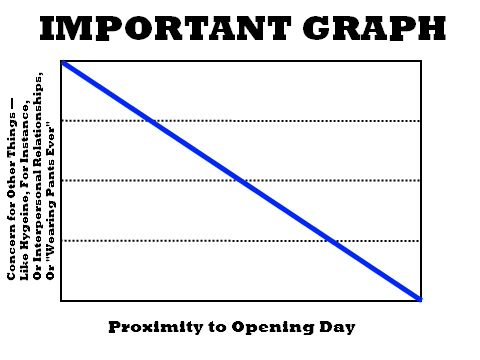
Baseball returns in just three weeks!
The Nine Best Right Fielders for 2013
When I started this series eight weeks ago, I didn’t immediately think that right field was obviously the deepest position in baseball, but after working to rank The Nine best players at each position it is extremely obvious. The top seven players on this list have MVP potential and I left guys off this list who are really good players.
I wasn’t picking between a bunch of question marks for #9, I was choosing among guys who I think are all very talented and who will have good seasons. Again, this list is of players projected to play right field for 2013, so position changes are taken into account. You’ll find Ben Zobrist and Josh Hamilton among this class of players settling into right this year.
My apologies to newly minted Indian Nick Swisher who was an outfielder when I wrote the first basemen list and a first basemen when I wrote the right field list. If Swisher has a big season, this is why he’s not on either list. If he has a bad season, I totally saw it coming.
9. Ichiro (Yankees)
Ichiro, despite his age, still plays great defense in right field, hits for high average, and runs the bases well. He should also see an uptick in power with a friendlier ballpark and should get a little help from a slightly better lineup around him. It would have been a lot better, but all of the Yankees are hurt. He’s not the MVP he once was, but I’m buying a very solid season from Ichiro in the Bronx.
8. Torii Hunter (Tigers)
Hunter had a huge season hitting between Mike Trout and Albert Pujols in 2012, so in choosing his next destination, he searched for a similarly cushy gig. And found it. He’ll hit between Austin Jackson (STT #1 CF) and Miguel Cabrera (STT #1 3B) and will play next to slight Trout downgrade Jackson in the outfield. Hunter had a big season last year, and while he’s not likely to match it, modest regression still earns him a place on this list with his mix of moderate power, speed, and defense.
7. Josh Hamilton (Angels)
Hamilton is baseball’s fragile giant. He’s shown, at times, flashes of historic talent and, at other times, flashes of unparalleled failure. He has impressive power and great raw skills, but has some of the worst plate discipline in a sport that includes Delmon Young. He has health issues and a history of off the field issues (i.e. drugs, alcohol, vision issues, energy drink addition). For my money, he has the widest possible range of outcomes of any player in the league. Hamilton hitting 50 HR seems equally as likely to me as him hitting .210. The upside is there, but age and fragility work against him. Plus there is an effort issue, as showcased by his utter lack of interest in playing baseball last September. Man, I just don’t know.
6. Carlos Beltran (Cardinals)
Beltran is not the defensive and baserunning star he once was, but he is still an extremely talented player when healthy. In seasons in which he has player 100 or more games, he has always posted a 3 WAR or better and has at times, approached 8 WAR. He’s on the downswing of a great career (Tell that to Mets fans!) and should be good for another great year if he remains healthy.
5. Jay Bruce (Reds)
Bruce hits for power and he walks. Those are two valuable qualities in a player, even if he is closer to .250 than .300 most seasons. The defensive numbers are a little all over the place, but he has 134 HR before his 26th birthday. That’s a good recipe for success and he should have it hitting behind the great Joey Votto.
4. Jose Bautista (Blue Jays)
If Joey Bats hadn’t missed half of 2012 with a wrist injury, an injury that is somewhat correlated with a loss in power, he’d probably be at the top of this list. The fact that he is fourth tells you just how good right field is right now. A healthy Bautista is a 40-50 HR guy with the ability to walk at a Bondsian rate while avoiding gaudy Dunnian strikeout numbers. He’s nothing special on defense or on the bases, but he is versatile and an absolute monster at the plate.
3. Giancarlo Stanton (Marlins)
Stanton has as much raw power as anyone in the game and puts in on display regularly between the lines. He’s a very good defender and he takes his walks at the plate. He’s a great young player, with an emphasis on both great and young separately. That is to say, he’s still very young. But he strikes out a ton and doesn’t do much for me on the bases. That doesn’t make him a bad player, it just keeps him from the top of the list. I’m also a believer in lineup protection more than most saber-guys and think it is especially real at the extremes. There is nobody even closer to Stanton’s level on the Marlins and he will be pitched around a lot. That doesn’t exactly hurt his rate stats, but it will drop the raw production and the frustration with his situation might have a slightly negative effect on his overall performance in 2013 before he gets traded in November.
2. Ben Zobrist (Rays)
The only reason Zobrist is likely no longer baseball’s most underrated player (Alex Gordon?) is because people like me have been talking him up long enough that it has finally caught on. He’s a great defender, a good baserunner, and a very good hitter. The plate discipline is excellent and his versatility makes me blush. He is an above average player at six or seven positions and hasn’t player fewer than 151 games since becoming a regular four years ago. He’s durable, he’s versatile, and he knows the strike zone. If you know anything about the type of players I most like to cheer for, you would rightly suspect that I would lose my mind if the Tigers found a way to acquire him.
1. Jason Heyward (Braves)
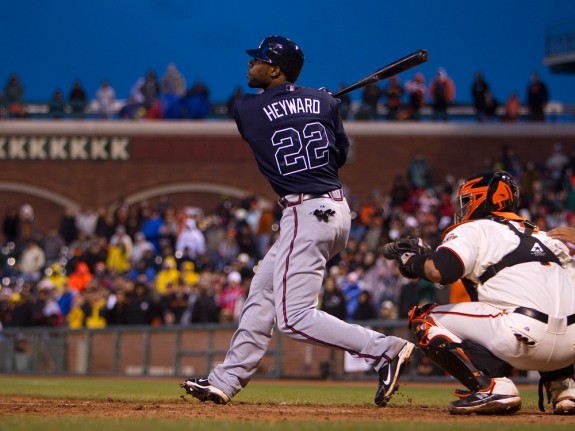
I’ll confess that I wasn’t a Heyward believer after his breakout 2010 season and felt super proud of myself for calling his 2011 regression. Didn’t I look silly in 2012? Heyward has a few trouble spots in that his plate discipline is actually getting worse each season, but he hits for power, plays elite defense, and runs the bases extremely well. On offense alone, he’s in the middle of this list, but he’s so good in the field and on the bases that he vaults himself up to the top. He’s also only 23 and has three seasons under his belt. He’s poised to lead the Braves back to the fake playoffs or better in 2013 with the Upton brothers to his right, and looks to be baseball’s best right fielder in the process.
What do you think? How does your top four look? Sound off in the comments section.
Ten Things to Know About Baseball
There are certain things about baseball that everyone should understand beyond the general rules of the games and day to day musings. Let’s call them axioms. Ten axioms about baseball that you should all take to heart ahead of Opening Day 2013. Here they are, just for fun. Add your own if you’d like.
10. Saves are made up and don’t matter. Much like the points on Whose Line Is It Anyway? Actually, exactly like that. Weird.
9. Playing the infield in is a bad idea in all circumstances unless it is the 9th inning and the winning run is on third base. Maybe you could talk me into the bottom of the 8th, but that’s my line in the sand. No further.
8. Pitcher’s duels are better than slugfests.
7. On Base Percentage (OBP) is better than Batting Average (AVG) in every way. There is really no reason for it to be displayed with any less prominence. Walks are not outs in disguise.
6. Sabermetrics are not for nerds who live in their mothers’ basements. They provide additional and often better information than traditional statistics. You don’t have to like them all, but when you dismiss them entirely rather than dismissing individual ones, you have sent the message that you would like to know less about baseball. Why would you want to know less about baseball?
5. There is nothing, and I mean nothing, better in sports than a position player getting called on to pitch.
4. Except maybe the even rarer occasion in which a pitcher is called on to play the field.
3. You can’t predict baseball. (There is even a Twitter account to back me up – @cantpredictball)
2. Actually, you often can. (@canpredictball)
1. Watching your team lose a baseball game is the second best way to spend your time. Right after watching your team win a baseball game.
Did we miss any axioms? Which is your favorite? Hopefully #5!
Closers Don’t Matter: Rondon, Dotel, Who Cares?

Alright guys, it’s time to have the talk. We’ve been putting it off for a while, but I think you’re ready. You’re starting to ask questions, and you should hear it from me.
Closers don’t matter.
I’m exaggerating a little bit. They matter because they’re one of your seven relievers and tend to pitch in close games. So it’s important that they aren’t bad, but they don’t matter in the way you think they do.
This is of importance because Tigers closer in waiting Bruce Rondon has struggled in Spring Training and everyone is starting to panic. “The Tigers need a proven closer!” they will say. “Rondon isn’t up to the task, we must find the Tigers a closer!” they are already saying.
But closers are just not as important as everyone thinks. You don’t need an experienced closer. You don’t need a closer at all. The Tigers would be great going closer by committee or to use Rondon. Or anyone who is reasonably competent.
Here’s why.
Saves Are Made Up
Saves are arbitrary. A three run or fewer lead? Bring in the closer! Four runs, forget about it. Why is it that a four run lead against the Angels isn’t a save but a three run lead against the Astros is? It makes no sense. You can also receive a save when you pitch horribly. If you come in with a three run lead and walk three and give up a hit, but then get the next three guys out, you get a save despite allowing more baserunners than outs.
Save are not a measure of performance, they are a measure of opportunity. If you gave the best reliever in baseball 50 save opportunities he would get 48 or 49 saves. If you gave the median reliever 50 save opportunities, he would get 44 or 45 saves. It does not require any sort of special skill to be a closer above and beyond pitching in any other inning.
The Ninth Inning Isn’t Always the Most Important
Why have we decided the last three outs are the most important and most difficult outs to get? If the middle of the order is up in the seventh inning of a one run game, that is when you should use your best reliever. If your closer is your best reliever, he should come into the game when it is most on the line.
If we were to assume that your closer is your best reliever, he should be used when you have the most to lose. That isn’t always the ninth inning. Don’t save him for an inning that might not come. The ninth inning is no different from any other inning.
Anyone Can Close
Think about this. A team’s All-Star closer goes down in Spring Training and will miss the whole season. They’re in trouble right? Wrong. They replace him with a middle reliever and they win the World Series. That happened last season.
Good relievers are good relievers. Use them and they will perform well. Sergio Romo wasn’t a proven closer and now, all of a sudden, he is one.
——
There is no closer mentality or proven closer mold. If you can pitch in the eighth inning, you can pitch in the ninth. We’ve seen middle relievers become closers and we’ve seen lots of critical innings come and go with closers waiting for a save that never came.
I realize I’m trying to make two points at once, so let me break it down. 1) Anyone who is a reasonable good reliever can pitch in the closer role and rack up saves. 2) The idea of a closer who pitches the ninth inning of close games is silly.
Both points are relevant to the current Tigers situation, so let’s take them in turn.
First, Rondon can close. So can Dotel, Benoit, or Coke. You don’t need any special skills. They are all capable relievers who could easily thrive in the ninth inning because they have shown they are able to perform in the 6th, 7th, and 8th inning. Maybe you might think that Rondon hasn’t earned his keep, and I suppose we could discuss if he is actually not ready to pitch in the majors at all, but I think that he is. And I think he would be perfect for the role.
I think that, because of point number 2. Turning your relief ace into a closer who has a very limited job description means you can’t use him when you need him earlier in games. So, why not use your third best reliever as your closer and leave your best two guys to pitch when you need them more?
That’s exactly what you should do. If I can’t win the war and eliminate the position of closer entirely, what if instead, we just didn’t use our best reliever for that spot and instead, recognized that we can get the most out of our bullpen by using our best reliever in a more flexible fashion.
I want Dotel, Benoit, and Coke available to pitch whenever I need them. If that is the 6th inning, so be it. They are better than Rondon right now, so I’d rather have them for earlier in the game if I get into a jam. Rondon, being the closer, will always get to start with no one on base and will only pitch when he doesn’t have to rush to warm up. He’ll know in advance he’s pitching, so he won’t need to get loose in a hurry.
Hmmm. A young, erratic reliever with a ton of potential. What’s the best way to use him? In situations with no one on base after a well-paced warm up. Sounds exactly like the closer role to me.
Now it may be the case the Rondon simply isn’t ready for big league pitching. If that proves to be the case after Spring Training (Guys, it’s been two weeks!), then he should spend time in Toledo and we shouldn’t bother having a closer at all.
Saves are all in our heads. There is no latent save. It was made up in the 70s by a sportswriter who was apparently too dense to look at strikeouts and ERA. You shouldn’t get special credit for getting three outs in the ninth when someone else just got three outs in the eighth. Managers should use the reliever best suited for each situation as it comes up. If that means Coke in the 7th, Dotel in the 8th, Rondon in the 9th, great. If it means a different order, that’s fine too.
I’m not worried for a second about Rondon in the closer role. In fact, I would advocate for it. It’s better to have your best guys available to pitch in any inning rather than pigeonholed into a single one.
Of the ten closers with the most saves in 2012, only four had more than 10 saves in 2011. Good pitchers will get saves and there’s a good case to be made that you’re wasting your best reliever if you make him your closer.
Your closer isn’t any more important than your eighth inning guy. Or your seventh inning guy. Your closer is someone who gets saves, and saves don’t count in the standings.
So I hope the Tigers go with Rondon or Dotel or anyone on the current roster. They don’t need to sign a proven closer because you don’t have to be proven to succeed in the closer’s role and the closer’s role doesn’t even matter that much to begin with.
Unless you’re playing fantasy baseball. Then it matters a lot.
What do you think? Is Rondon the right fit for the closer’s role? Do we overvalue closers? If you answered anything but yes to the last question, read this article again and again until your answer changes.
 New English D